
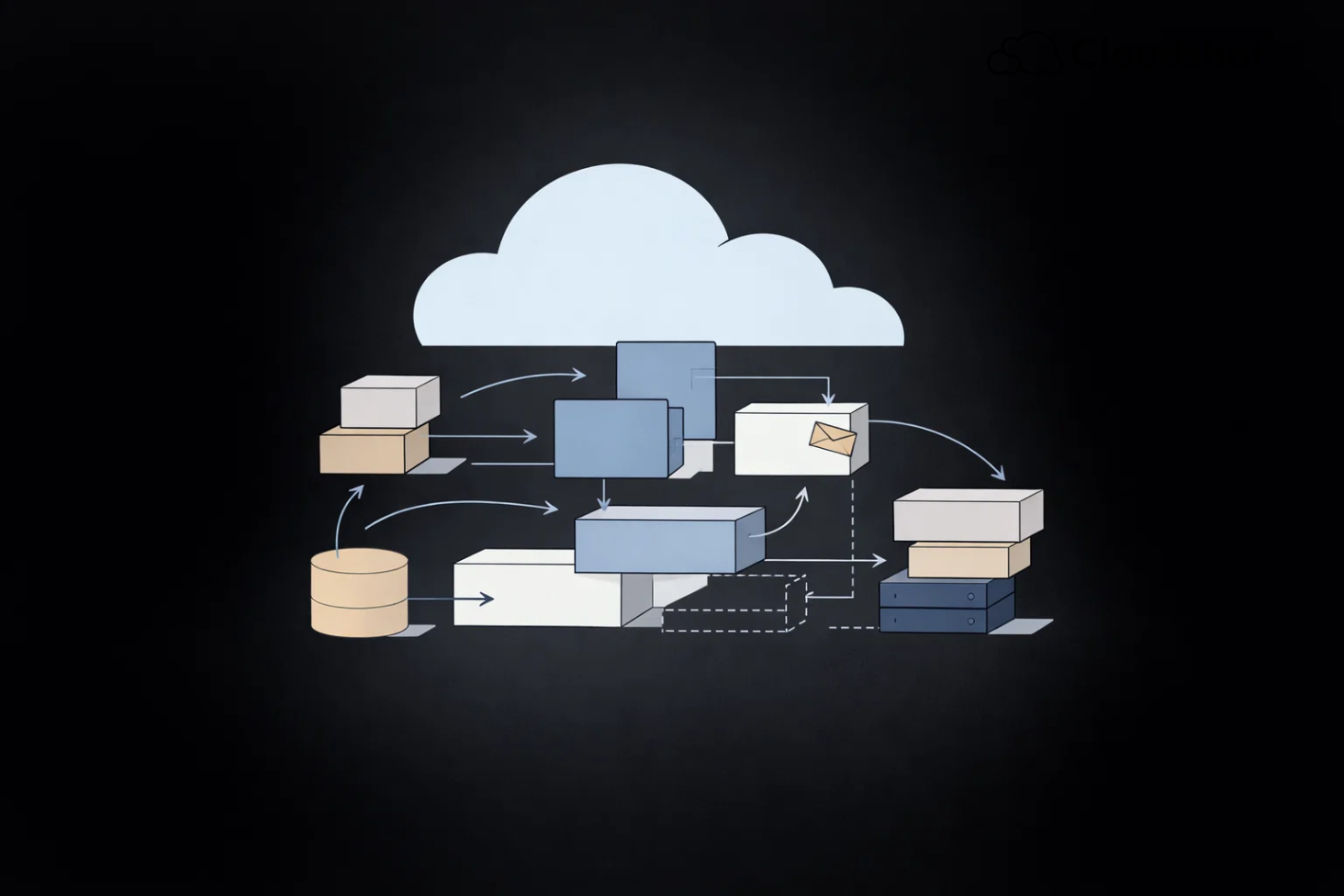
Most cloud environments don't look the way anyone originally designed them.
They look the way they accumulated.
A security exception added during an outage.
A routing change made to unblock a release.
A temporary workaround that quietly became permanent.
Each decision made sense at the time. None were careless. But over months and years, those decisions reshaped the system in ways few people fully understand.
The cloud still runs. But confidence slowly erodes.
When Architecture Becomes an Outcome, Not a Design
Cloud environments change constantly.
Automation accelerates delivery.
Infrastructure adapts in real time.
Teams optimize for speed and reliability under pressure.
What doesn't scale at the same pace is context.
Why was this exception added?
What problem was this dependency solving?
Which risks were consciously accepted—and which just carried forward?
Over time, design intent fades. The architecture becomes an outcome of past decisions rather than an intentional system.
That's when governance starts to feel heavy.
The Quiet Cost of Missing Context
When teams don't understand how the cloud arrived at its current state, they hesitate.
They delay refactoring because something might break.
They avoid tightening policies because of unknown dependencies.
They preserve complexity because removing it feels riskier than leaving it in place.
This is how drift hardens.
Not because teams don't care about governance—but because they lack confidence in what they're governing.
Controls get added after issues surface.
Audits become stressful.
Automation enforces today's mess instead of correcting it.
The problem isn't enforcement.
It's understanding.
Governance Starts with Reflection, Not Restriction
Strong cloud governance doesn't begin with stricter policies or heavier automation.
It begins with a simpler question:
Do we actually know why our cloud looks the way it does today?
Before teams can improve governance, they need clarity on:
what changed over time
which decisions were intentional
where temporary fixes became permanent
how drift accumulated quietly
Without this reflection, automation locks in assumptions instead of correcting them.
Governance becomes reactive instead of deliberate.
Why Checklists Still Matter
In fast-moving cloud environments, teams often jump straight to solutions.
New tooling.
New controls.
New automation layers.
What gets skipped is the pause.
A checklist isn't about compliance. It's about focus.
The right questions, asked at the right moment, surface gaps in understanding before they turn into risk.
Questions like:
Which parts of the system are still aligned with original intent?
Which decisions would we repeat today—and which wouldn't we?
Where does ownership feel unclear?
Which areas feel too fragile to touch, and why?
These aren't technical questions. They're governance questions.
Turning Clarity into Control
When teams regain context, everything changes.
Refactoring becomes safer.
Automation becomes intentional.
Policies align with reality instead of fighting it.
Governance stops feeling like friction and starts feeling like confidence.
This is how teams move from managing drift to preventing it.
How Cloudshot Supports Reflective Governance
Cloudshot helps teams preserve the context behind cloud evolution by connecting:
infrastructure changes
dependency behavior
system timelines
Instead of guessing why things exist, teams can see how decisions unfolded over time.
That visibility makes reflection possible—and governance effective.
But the first step isn't tooling.
It's asking the right questions.
That's why we created a simple, practical checklist designed to help teams step back and reflect on how their cloud arrived at its current state—before locking it in further through automation or policy.