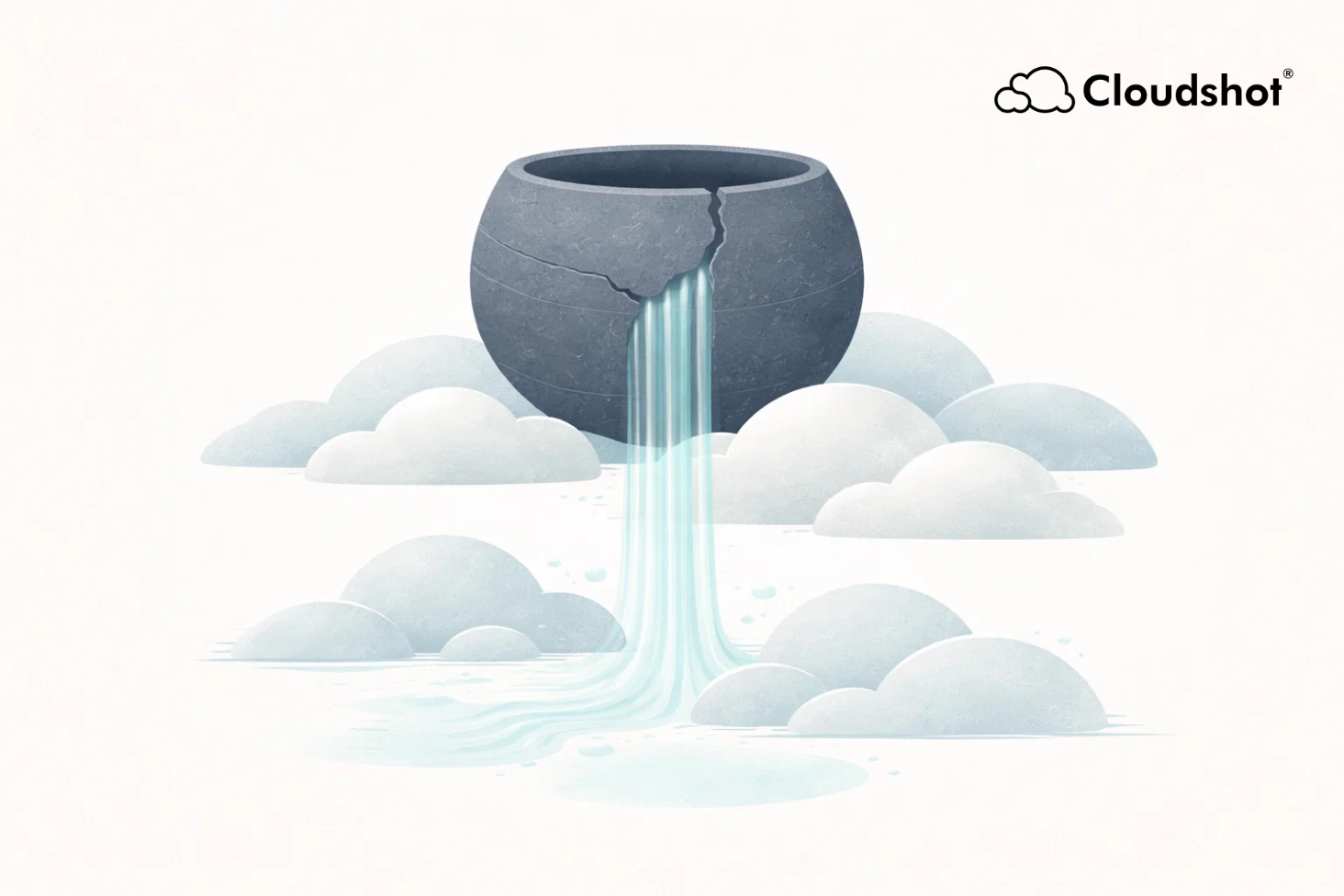
Most cloud leaks don't announce themselves.
They don't trigger alerts.
They don't break systems.
They don't look urgent.
They live inside assumptions — decisions that were once valid, then quietly expired.
As the year closes, this is where the most expensive cloud mistakes tend to hide.
Why Assumptions Are the Most Dangerous Cloud Artifact
Cloud environments are built on assumptions.
Traffic forecasts.
Scaling behavior.
Cost baselines.
Temporary exceptions.
Ownership boundaries.
Each assumption is reasonable at the time it's made. The risk begins when no one checks whether it's still true.
Unlike misconfigurations, assumptions don't fail loudly.
They decay.
How Year-End Pressure Makes This Worse
As teams push to close the year:
Fewer architectural changes are questioned
Temporary fixes are left in place
"We'll revisit this next quarter" becomes default thinking
Meanwhile, the system keeps evolving.
Workloads shift.
Usage patterns change.
Discounts expire.
Dependencies behave differently under load.
What was once efficient becomes wasteful.
What was once safe becomes risky.
The Hidden Cost of "Still Working"
Many year-end cloud leaks come from things that are technically working.
Autoscaling reacts as designed — just to the wrong baseline.
Retry logic stabilizes traffic — while inflating cost.
Permissions enable delivery — while expanding attack surface.
Budgets look healthy — until delayed impact lands.
Because nothing is broken, nothing gets questioned.
This is why the final invoice of the year often feels unfair — even though it's entirely predictable in hindsight.
Why FinOps and DevOps See Different Symptoms
FinOps teams see anomalies late.
Spend drifts upward. Forecasts miss. Explanations replace control.
DevOps teams see stability.
No outages. No alerts. No urgent fixes.
Both perspectives are accurate — and incomplete.
The real issue sits between them: unvalidated assumptions about how the system behaves today.
Continuous Validation Beats Periodic Audits
The teams that avoid year-end surprises don't rely on quarterly reviews or spreadsheet audits.
They validate continuously:
Is this scaling behavior still justified?
Is this exception still necessary?
Is this cost increase tied to value or inertia?
Is this architecture behaving as intended?
This requires context across time — not snapshots.
Where Cloudshot Changes the Equation
Cloudshot helps teams surface assumptions by showing how systems actually behave as they evolve.
Instead of treating configurations as static truths, Cloudshot reveals:
how behavior shifts after changes
where pressure accumulates silently
which decisions still make sense — and which don't
By connecting change history with real-world impact, assumptions become visible.
And visible assumptions can be challenged.
Cloudshot doesn't replace FinOps or DevOps judgment. It gives both teams the same context to apply it.
A Familiar Year-End Scenario
Finance notices cloud spend climbing in December despite no new launches.
Engineering points to stable deployments.
Operations sees no incidents.
No one sees a clear culprit.
With preserved context, the answer appears.
A retry rule introduced months ago interacts with a traffic shift. Autoscaling responds correctly — and expensively.
The issue isn't a bug. It's an assumption that expired quietly.
Why the Last Leak Is the Most Predictable
The final cloud leak of the year isn't bad luck.
It's the result of assumptions that went unvalidated while attention moved elsewhere.
As you close the year, the most important question isn't: "What broke?"
It's: "What are we still assuming is true?"