
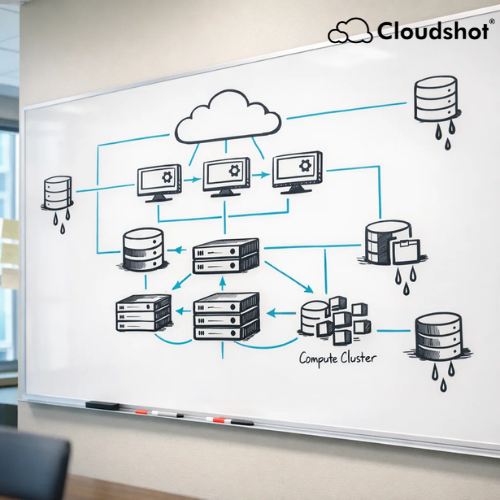
Cloud infrastructure offers organizations remarkable flexibility.
Teams can provision resources instantly, scale workloads automatically, and experiment with new services without long procurement cycles.
But this flexibility introduces a subtle challenge.
Cloud waste.
Unlike traditional infrastructure inefficiencies, cloud waste rarely appears as a single obvious mistake. Instead, it emerges gradually as systems evolve.
Over time, unused or inefficient resources accumulate quietly across environments.
How Cloud Waste Appears
Cloud waste typically develops through normal operational behavior.
Development teams launch temporary environments for testing. Engineers scale services during peak traffic. New infrastructure components are introduced to support evolving applications.
These changes are necessary.
However, once workloads shift or projects end, the infrastructure supporting them may remain active.
Examples include:
Idle compute instances left running after experiments
Storage volumes no longer attached to active systems
Load balancers configured for traffic levels that no longer exist
Autoscaling policies that expanded resources but never contracted them
Individually, these resources appear harmless.
Collectively, they generate significant ongoing costs.
Why Waste Is Hard to Detect
Most organizations monitor cloud spending through billing dashboards or cost reports.
While these tools reveal total spending and service-level usage, they rarely highlight inefficiencies clearly.
A billing report may show increased compute costs.
But it does not explain which specific resources are idle or underutilized.
Similarly, infrastructure monitoring tools focus on performance metrics rather than cost efficiency.
As a result, waste often remains hidden across multiple accounts, services, and environments.
The DevOps and Finance Perspective
The challenge becomes especially visible during cost reviews.
Finance teams examine the cloud invoice and see spending increases.
Engineering teams review infrastructure and observe normal system behavior.
Neither perspective is incorrect.
Finance evaluates financial outcomes.
Engineering evaluates operational performance.
The missing layer is efficiency visibility. Without it, identifying waste requires manual investigation across dashboards, logs, and billing tools.
A Snapshot Approach to Waste Identification
The first step toward reducing cloud waste is visibility.
Organizations need a quick way to identify where infrastructure inefficiencies exist across their environments.
The Cloud Waste Identification Snapshot provides this starting point.
It analyzes infrastructure patterns to highlight:
Idle resources that continue consuming compute or storage
Underutilized infrastructure that exceeds current workload requirements
Services that remain active after projects or tests conclude
Infrastructure components that contribute to unnecessary spending
Instead of scanning individual dashboards, teams receive a consolidated view of potential waste areas.
Aligning DevOps and Finance
When waste becomes visible, conversations between engineering and finance become more productive.
DevOps teams gain insight into where resources can be optimized.
Finance teams gain confidence that spending increases are being actively managed.
This shared visibility helps organizations maintain cost discipline without slowing development.
Preventing Waste Before It Accumulates
Cloud waste is rarely intentional.
It emerges naturally as infrastructure grows and evolves.
The key is identifying inefficiencies early before they accumulate into larger cost issues.
By introducing regular visibility into idle and underutilized resources, organizations can maintain efficient cloud environments while continuing to scale their applications.