
Most incident response failures do not happen because teams lack runbooks.
They happen because runbooks lack clarity about who owns what when pressure hits.
In theory, incident documentation exists. Steps are written. Escalation paths are defined. Yet in real incidents, teams still slow down, not because they do not know what to do, but because they do not know who should act next.
That gap is where minutes turn into hours.
Why Generic Runbooks Break During Real Incidents
Most runbooks are written to be comprehensive. They try to cover every scenario and every team. Over time, they become broad, dense, and difficult to navigate.
During an incident, that creates friction.
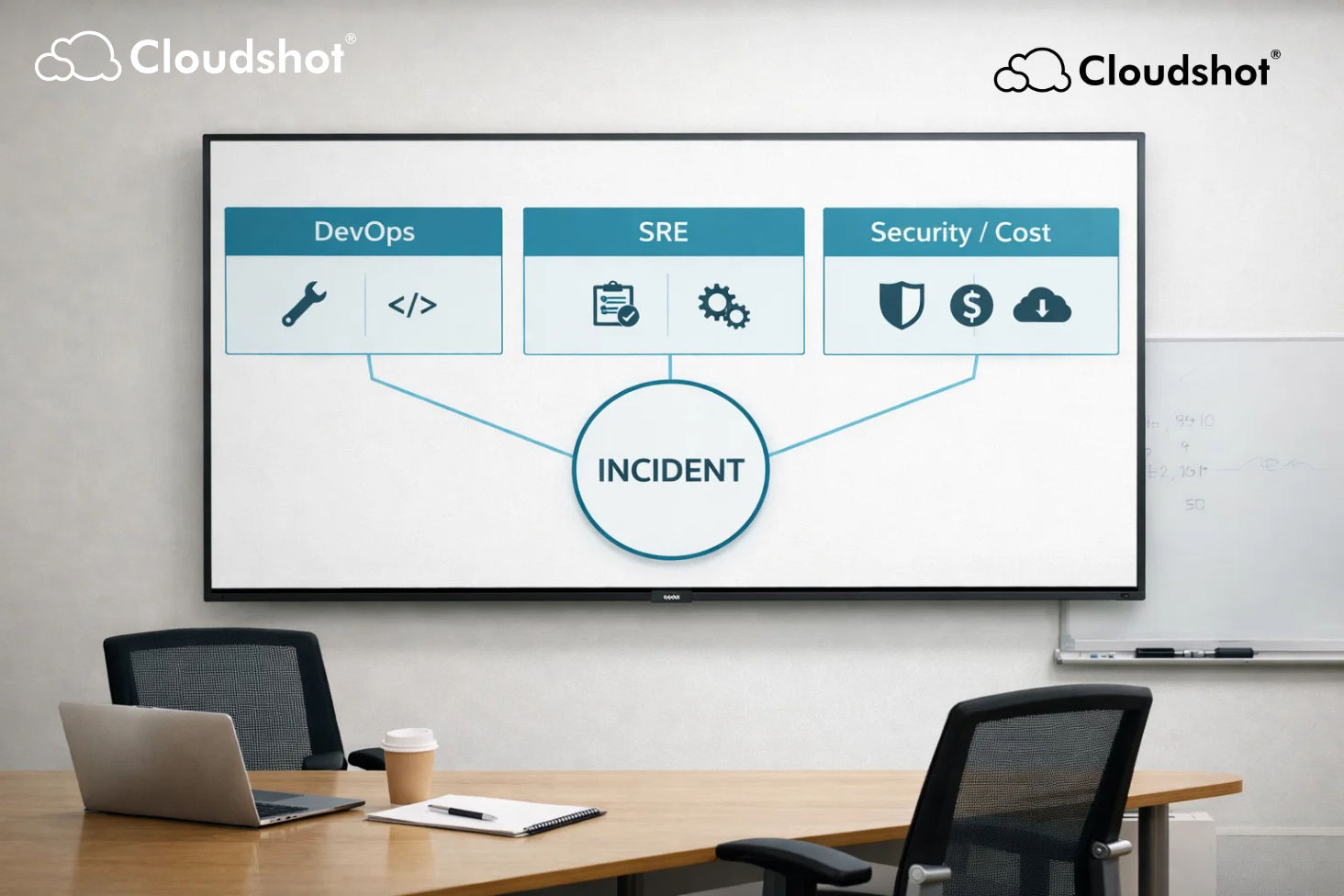
DevOps teams look for service level actions.
SRE teams focus on stability and rollback decisions.
Security checks for access changes and policy exposure.
Finance wants to understand cost impact and accountability.
Everyone opens the same document.
Everyone reads it differently.
Ownership becomes implicit instead of explicit. Teams ask questions that should already have answers:
Who is driving this response
Who approves changes
Who owns downstream impact
Who is accountable for cost decisions
These questions do not signal poor discipline. They signal that the runbook was never designed for real time collaboration across roles.
The Hidden Cost of Unclear Ownership
When ownership is unclear, teams hesitate.
Actions are delayed while people confirm responsibility.
Escalations happen late or redundantly.
Decisions get deferred until consensus forms.
Meanwhile, the system continues to drift.
Cost impact accumulates quietly.
Reliability degrades incrementally.
Trust erodes between teams that are supposed to work together.
Incidents become stressful not because the problem is complex, but because coordination is fragile.
Why Role Based Runbooks Change Response Behavior
A role based incident runbook starts from a different assumption.
Not everyone needs the same information at the same time.
Instead of one generic document, the runbook adapts to the role responding.
DevOps sees actions tied directly to the services they own.
SRE sees reliability steps aligned with the current system state.
Security sees access and policy checkpoints relevant to the incident.
Cost ownership is visible instead of assumed.
This does not fragment response.
It aligns it.
When ownership is explicit, teams move with confidence.
When accountability is clear, decisions happen faster.
When cost and technical impact are seen together, tradeoffs are intentional.
From Documentation to Operational Clarity
Role based runbooks turn documentation into operational guidance.
They reduce the need for real time negotiation.
They remove guesswork around escalation.
They help teams focus on action instead of coordination.
Importantly, they also age better.
When ownership changes, the runbook updates.
When systems evolve, responsibilities remain clear.
When teams rotate, context does not disappear.
How Cloudshot Supports Role Based Incident Response
Cloudshot enables role based incident runbooks by grounding them in live system context.
Runbooks are not static documents sitting outside the system. They are connected to ownership, topology, and change history.
As infrastructure changes, the runbook remains relevant.
As teams evolve, accountability stays visible.
As cost behavior shifts, impact is surfaced early.
This allows teams to respond with shared understanding instead of fragmented assumptions.
The goal is not more process.
It is less confusion when time matters most.
A Practical Starting Point for Teams
To make this easier to adopt, Cloudshot created a Free Role Based Incident Runbook Template.
It is editable.
It is designed for real workflows.
It can be plugged into CI CD and operational processes.
Most importantly, it helps teams clarify ownership before the next incident forces the question.
Because incidents do not slow down due to missing steps.
They slow down when no one knows who owns the next move.