
This week, AI infrastructure stopped being a cloud conversation and became a power and real estate conversation.
Capacity is getting reassigned, grids are getting redesigned, and the winners will be the teams who can model constraints before they hit production.
🌩 This Week's 3 Signals
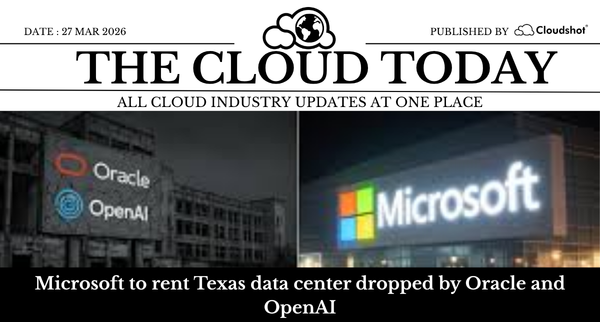
1. Microsoft steps in to lease a massive Texas data center that Oracle and OpenAI dropped
Reuters reported Microsoft agreed to lease a large-scale data center project in Abilene, Texas, originally intended for Oracle and OpenAI.
Why it matters
AI capacity is now being reshuffled like strategic inventory. If a hyperscale site changes hands, it changes the regional capacity curve and the pricing pressure that follows.
Action to be taken
Build a capacity risk register for your AI roadmap. Track which workloads require guaranteed GPU supply, which regions you depend on, and what your second option is if supply tightens or moves.
2. AI demand accelerates long-duration energy storage rollouts
Reuters highlighted how surging power demand from AI and data centers is pushing long-duration energy storage projects that can deliver power for more than 8 hours, aimed at grid reliability.
Why it matters
Power stability is becoming part of your availability strategy. Regions that can pair renewables with storage will scale data centers faster and more predictably.
Action to be taken
Add an energy reliability layer to your region strategy. Tag critical services by which regions have stable supply and which are exposed to curtailments, peak pricing, or grid delays.
3. NextEra secures land in Texas for a giant gas plant aimed at powering data centers
Reuters reported NextEra secured land in Texas for a gas-fired power plant intended to support a major data center campus, tied to the growing power needs of data centers.
Why it matters
This is the cloud meeting the grid head-on. When data centers drive new generation builds, energy becomes a first-class infrastructure dependency, not a facilities footnote.
Action to be taken
Run a grid stress drill on your most important region. Simulate constrained power, delayed interconnect, and price shocks. Document the real impact on uptime, cost, and delivery timelines.
💡 Cloudshot Tip of the Week
Create a single CTO view that ties together three timelines.
Change, access, and cost. Then add one more tag. Region constraint. Power and supply exposure.
When an incident or cost spike hits, you should be able to answer fast. What changed, who owned it, what permissions shifted, and whether the region itself was a hidden constraint.
🗓 What We Published This Week
Mar 23 (Mon)
The Rise of Cloud Complexity Debt
How architectural overload quietly becomes governance debt that slows every decision.
→ Full ArticleMar 24 (Tue)
When Security Teams Discover Changes Too Late
Why late discovery turns misconfigurations into incidents, audits, and blame cycles.
→ Full ArticleMar 25 (Wed)
Predicting Cascade Failures Before Deployment
Tech demo. Simulate failure chains in advance so one small change does not break six systems.
→ Full Article🔭 Strategic Signal
This week reinforced a CTO truth.
Cloud scale is now governed infrastructure.
Capacity gets reassigned.
Grids require storage.
Power plants get planned around data center demand.
Teams that can visualize constraints early will keep shipping.
Teams that treat cloud as elastic will keep getting surprised.
⚠️ Before it happens to you...
Do one drill.
Pick your most business-critical AI workload and trace it across constraints.
Capacity, power, and region risk. If you cannot explain the blast radius in minutes, you will not be able to govern it in a crisis.
Sums up updates in 2 mins reading here. Saves hours of reading news.